Fortification Premix

Folic Acid & Iron

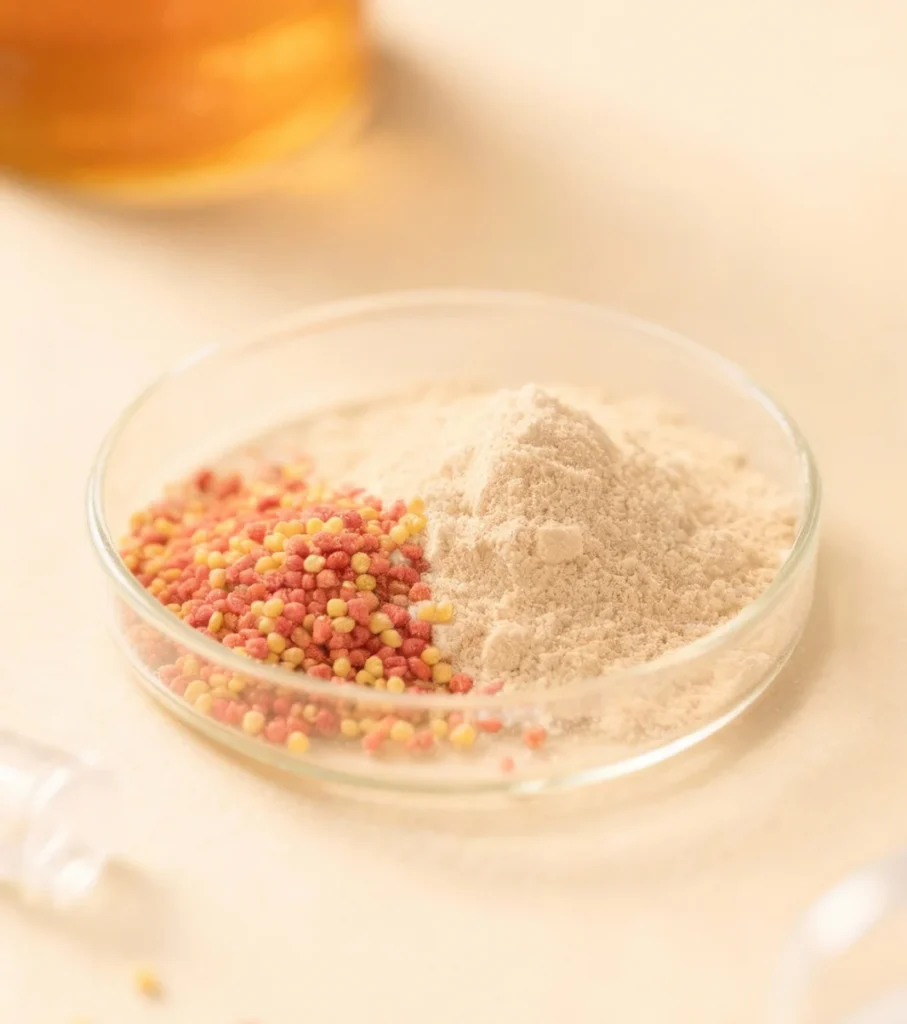
A Folic Acid and Iron Fortification Premix is a specialized blend containing precisely these two micronutrients, designed to be added to wheat flour to address two of the most critical global public health concerns: neural tube defects and iron deficiency anemia.

This combination is the cornerstone of most national flour fortification programs.

The Public Health Rationale

This targeted premix addresses two major issues with a single, cost-effective intervention:

Folic Acid

Prevents Neural Tube Defects (NTDs) like spina bifida and anencephaly in newborns. Because the neural tube forms and closes very early in pregnancy (often before a woman knows she is pregnant), ensuring all women of reproductive age have sufficient folate levels through fortified staple foods is a highly effective public health strategy.

Iron

Combats Iron Deficiency Anemia — a condition that can severely affect female athletes. Iron deficiency can lead to fatigue, reduced stamina, weaker training performance, slower recovery, and increased risk of injury. In more severe cases, it can disrupt cognitive focus and cause complications during pregnancy.

Key Technical Considerations

When procuring or formulating an “Iron and Folic Acid” premix, the following details are critical:

01

Choice of Iron Compound

This is the most technically complex decision, as no single iron compound is perfect for all situations. The choice is a trade-off between bioavailability (how well the body absorbs it), cost, and reactivity (whether it affects the color or taste of the flour or final product).

Types of Iron Compounds:
Type Iron Compound Pros Cons Best For
Water-Soluble Ferrous Sulfate High bioavailability Highly reactive; can cause rancidity, color changes Quick-consumption baked goods
Poorly Soluble Ferrous Fumarate Good bioavailability, less reactive More expensive Standard white flour (common choice)
Water-Insoluble Electrolytic Iron Low reactivity; cheap Low bioavailability; needs higher dosage Not recommended by WHO for anemia-prevalent regions
Protected/ Complexed Sodium Iron EDTA Very high bioavailability Ferrous Sulfate High-phytate flours or severe anemia contexts
Guidance:
  • Ferrous Fumarate is widely used.
  • Sodium Iron EDTA is superior but costlier.
02

Folic Acid Form & Stability

This is the most technically complex decision, as no single iron compound is perfect for all situations. The choice is a trade-off between bioavailability (how well the body absorbs it), cost, and reactivity (whether it affects the color or taste of the flour or final product).

Form

Folic Acid (Pteroylmonoglutamic acid)

Stability

 Well-retained during storage and baking

Overage

 Included to compensate for processing losses

Practical Example:

Premix Specification

  • Product Name:

Wheat Flour Fortification Premix (Iron & Folic Acid)

  • Carrier:

 Food-grade filler (starch or maltodextrin)

  • Active Ingredients:

Iron (as Ferrous Fumarate): 10,000 mg/kg (1.0%)
Folic Acid: 1,000 mg/kg (0.1%

  • Dosage Rate:

0.1%–0.2% (1–2 g/kg flour)

Operational Guide for Millers

Using this premix correctly is vital for its effectiveness:
1/3

Dosing:

Use a precision feeder calibrated for low dosing (e.g., 1.5 g per kg flour).

2/3

Mixing:

High-speed continuous mixers ensure uniform distribution.

3/3

Quality Control:

Premix: Verify with CoA.
Flour: Test by HPLC and atomic absorption.

Next Product:

Whole Wheat Flour